Porter, S. & Brinke, L. T. (2009). Dangerous decisions: A theoretical framework for understanding how judges assess credibility in the courtroom. Legal and Criminological Psychology, 14(1), 119–134.
This article by Porter and ten Brinke addresses the problem of how judges assess the credibility of witnesses in the courtroom, highlighting the potential for biases that can lead to wrongful convictions. Prior to this work, it was assumed that credibility assessment was a straightforward, common-sense task; however, the authors argue that it is a complex and often unreliable process influenced by rapid, intuitive judgments based on a witness's appearance and demeanor. They propose the Dangerous Decisions Theory, which outlines how initial impressions can lead to biased interpretations of evidence, ultimately affecting judicial outcomes. The authors found that judges often rely on misleading cues and hold false beliefs about deception, suggesting that education and expert testimony could improve the accuracy of credibility assessments. This research reveals the significant impact of cognitive biases on legal decision-making, an area that had not been thoroughly examined before.
Potter, J. (2019). Major Theories of Media Effects: Analysis and Evaluation. Peter Lang Publishing, Inc.
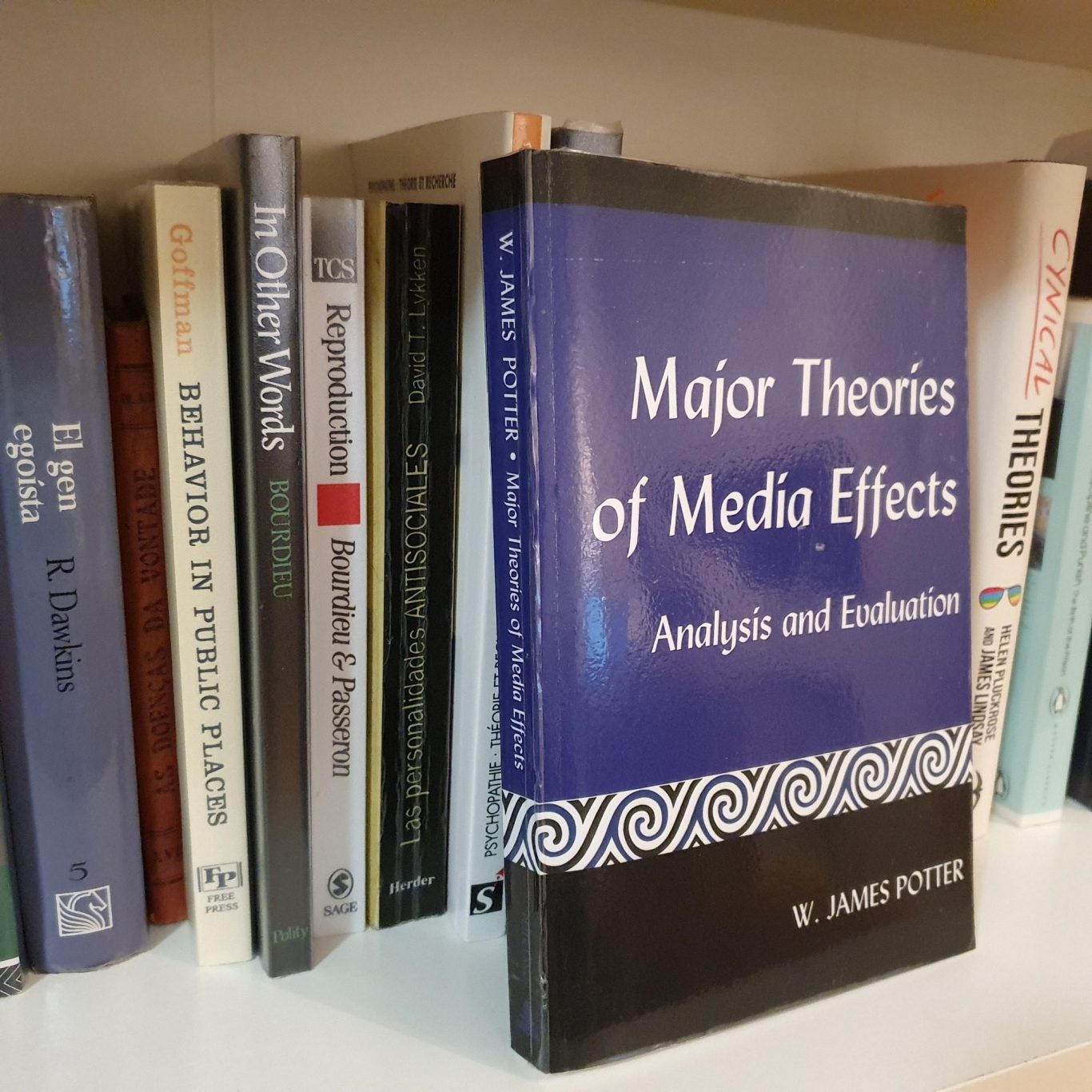
Major Theories of Media Effects provides a comprehensive overview of the main theories used to understand how media influence individuals and society. The book examines decades of research in communication and media studies, offering a clear framework for evaluating both classic and contemporary approaches to media effects.
Potter reviews key theories such as cultivation theory, agenda-setting, framing, uses and gratifications, social learning, and priming. For each theory, he explains its core assumptions, the types of media influence it addresses, and the evidence supporting or challenging its claims. Rather than treating media effects as simple or uniform, the book emphasizes that media influence is complex, varies across individuals, and depends on social and psychological factors.
A central contribution of the book is its focus on critical evaluation. Potter encourages readers to assess media theories based on their explanatory power, empirical support, and practical relevance. He highlights the strengths and limitations of each approach, helping readers understand why some theories are more suitable for explaining certain media effects than others.
The book also addresses changes in the media environment, including digital media, social platforms, and personalized content. Potter argues that while new technologies have altered how people engage with media, many foundational theories remain relevant when adapted to contemporary contexts.
Quezada, J. A., Mustafa, Z., Zhang, X., Zakhary, B., Firek, M., Coimbra, R., & Brenner, M. (2020). A nationwide study of intimate partner violence. The American Surgeon, 86(10), 1230–1237.
This article addresses the problem of intimate partner violence in the United States, focusing on its incidence, injury patterns, and outcomes based on a nationwide dataset. The authors utilized the Nationwide Emergency Department Sample database from 2010 to 2014 to analyze 132,806 intimate partner violence-related emergency visits, revealing that most victims were young women, while older men were more likely to be hospitalized with severe injuries. They found that the overall mortality rate associated with partner violence was low, with significant differences in hospitalization and mortality rates between genders. This study provides new insights into the demographic and clinical characteristics of partner violence victims, highlighting the need for targeted interventions and awareness in healthcare settings.
Rand, D. C. & Feldman, M. D. (2001). An explanatory model for Munchausen by proxy abuse. International Journal of Psychiatry in Medicine, 31(2), 113–126.
This article addresses the complex issue of Munchausen by proxy (also called factitious disorder imposed on another) abuse, where a caretaker, typically a mother, fabricates or induces illness in a child for emotional gratification. The authors conducted a comprehensive review of personal accounts from perpetrators and professionals, alongside existing literature, to develop a behavioral model that identifies key factors contributing to this syndrome, including emotional drives, breakdowns in internal and external inhibitions, and the reinforcement of abusive behaviors. They found that Munchausen by proxy behavior is learned and maintained through observable actions rather than solely through psychological motivations, providing a clearer understanding of why this behavior is more prevalent among mothers and why it is difficult for perpetrators to cease.
Robertson, C. E., Pröllochs, N., Schwarzenegger, K., Pärnamets, P., Van Bavel, J. J., & Feuerriegel, S. (2023). Negativity drives online news consumption. Nature Human Behaviour, 7(5), 812–822.
This article investigates the impact of negative and emotional language on online news consumption, addressing the problem of understanding what drives user engagement with news content. The authors conducted a series of randomized controlled trials using a large dataset from Upworthy.com, analyzing over 105,000 headline variations and 5.7 million clicks. They found that negative words significantly increased click-through rates (CTR), while positive words decreased them, with each additional negative word increasing CTR by approximately 2.3%. This research provides empirical evidence supporting the negativity bias in news consumption, highlighting that even outlets branded as positive can benefit from negative language in attracting readers.
Robinson, J. & Yoshida, K. (2022). How Many More Women? The silencing of women by the law and how to stop it. Endeavour.

How Many More Women? by Robinson and Yoshida defends that legal systems fail to protect women and, in some cases, actively silence them. The book focuses on the experiences of women who report abuse, discrimination, or harassment and encounter legal processes that allegedly discourage, discredit, or penalize them for speaking out. Through case examples and legal analysis, the authors argue that laws intended to provide justice can instead reinforce power imbalances and protect institutional interests.
A central theme of the book is the argument that the use of legal mechanisms—such as defamation law, non-disclosure agreements, and adversarial court procedures—deters women from pursuing claims. The authors argue that emotional distress, credibility assessments, and gendered expectations shape legal outcomes, often to women’s disadvantage. The book calls for reforms aimed at improving access to justice, transparency, and accountability.
The book includes a chapter to discuss the Heard–Depp case. The authors present Heard’s allegations as credible and emblematic of legal systems silencing women, while giving little attention to the extensive judicial findings that complicate this interpretation.
Sadek, J. (2022). Malingering and stimulant medications abuse, misuse, and diversion. Brain Sciences, 12(8), 1004.
This article addresses the challenges of malingering and stimulant medication misuse in the assessment and management of Attention Deficit Hyperactivity Disorder (ADHD). The authors conducted a literature review over the past 15 years, highlighting the prevalence of malingering, the reasons behind it, and the inadequacies of self-report measures in detecting it. They found that while some neuropsychological tests and performance validity tests show promise in identifying malingered ADHD, no single method is foolproof. The article emphasizes the need for a comprehensive assessment approach that includes collateral information and performance-based measures to better detect malingering in ADHD evaluations.
Schroeder, R. W., Clark, H. A., & Martin, P. K. (2021). Base rates of invalidity when patients undergoing routine clinical evaluations have social security disability as an external incentive. The Clinical Neuropsychologist, 36(7), 1–13.
This article addresses the problem of high rates of invalidity in neuropsychological evaluations when patients have Social Security Disability as an external incentive. Prior to this study, estimates of invalidity rates in such contexts varied widely, with some suggesting a median of 25%. The authors conducted a study involving 242 patients to determine the base rates of invalidity based on their Social Security Disability pursuit status. They found that 46% of patients with Social Security Disability as an incentive produced invalid data, with rates varying from 39.3% to 58.6% depending on their disability status. This study reveals that even patients merely considering Social Security Disability can frequently invalidate testing, highlighting the significant impact of external incentives on evaluation outcomes, which was not fully understood before.
Silva, T. C. (2021). Assessment of credibility of testimony in alleged intimate partner violence: A case report. Journal of Forensic Psychology Research and Practice, 22(1), 58–86.
This article addresses the challenge of assessing the credibility of testimony in cases of alleged intimate partner violence, highlighting the inadequacies of unstructured approaches that often overlook empirical research on victim and perpetrator behaviors. The author applied a structured credibility assessment method to a high-profile case involving Johnny Depp and Amber Heard, revealing significant discrepancies between the alleged victim's testimony and the evidence presented. She found that the structured assessment indicated low credibility for the victim's claims, suggesting that the testimony might not be truthful. This study underscores the potential benefits of structured methods in improving the accuracy of credibility assessments in IPV cases, a perspective that was less emphasized in existing literature.
Smith, P. H., Homish, G. G., Leonard, K. E., & Cornelius, J. R. (2012). Intimate partner violence and specific substance use disorders: Findings from National Epidemiological Survey on Alcohol and Related Conditions. Psychology of Addictive Behaviors, 26(2), 236–245.
This article addresses the relationship between specific substance use disorders and intimate partner violence (IPV), a well-documented but complex association. The authors utilized data from the National Epidemiologic Survey on Alcohol and Related Conditions to analyze the associations between partner violence perpetration and victimization with alcohol, cannabis, cocaine, and opioid use disorders, including poly-substance use. They found that alcohol and cocaine use disorders were significantly associated with partner violence perpetration, while cannabis and opioid use disorders were linked to victimization. Notably, the study revealed that the combination of alcohol and cannabis use disorders decreased the likelihood of partner violence perpetration, contrasting with the increased likelihood associated with alcohol and cocaine use disorders. This research enhances our understanding of how specific substances relate to IPV dynamics, particularly highlighting the nuanced effects of poly-substance use.
Society of Professional Journalists (2024). Code of Ethics. Available from https://www.spj.org/wp-content/uploads/2024/08/spjcode-of-ethics.pdf [Accessed on September 19, 2025].
The Code of Ethics (2024) of the Society of Professional Journalists sets out core principles intended to guide responsible and trustworthy journalism. The document emphasizes that ethical journalism is essential to an informed public and a healthy democracy. It is organized around four main principles: seek truth and report it, minimize harm, act independently, and be accountable and transparent. Journalists are encouraged to verify information carefully, provide context, and avoid distortion or oversimplification. At the same time, the code stresses the importance of balancing the public’s need for information with respect for privacy, dignity, and potential harm, especially when reporting on vulnerable individuals. Independence from political, commercial, or personal interests is presented as a cornerstone of credibility. Finally, the code calls on journalists to take responsibility for their work, correct errors promptly, and explain ethical decisions to the public. Overall, the Code of Ethics serves as a practical framework for maintaining integrity, fairness, and public trust in journalism.
Spellman, B. A. & Tenney, E. R. (2010). Credible testimony in and out of court. Psychonomic Bulletin & Review, 17(2), 168–173.
This article by Spellman and Tenney addresses the complex issue of how credibility is assessed in legal contexts, particularly focusing on the factors influencing perceptions of informants' credibility. Prior to this work, it was understood that various characteristics of the informant, listener, and situation play roles in credibility judgments, but the authors emphasize the importance of calibration—specifically the relationship between an informant's confidence and their accuracy—as a critical yet underexplored factor. The authors conducted a review of existing literature and presented new findings indicating that people can infer an informant's credibility based on their calibration, even with limited information. This research highlights that while confidence is often seen as a key indicator of credibility, understanding calibration can provide deeper insights into the reliability of informants, a nuance that was less emphasized in previous studies.
Stark, E. (2007). Coercive Control: How men entrap women in personal life. Oxford University Press.
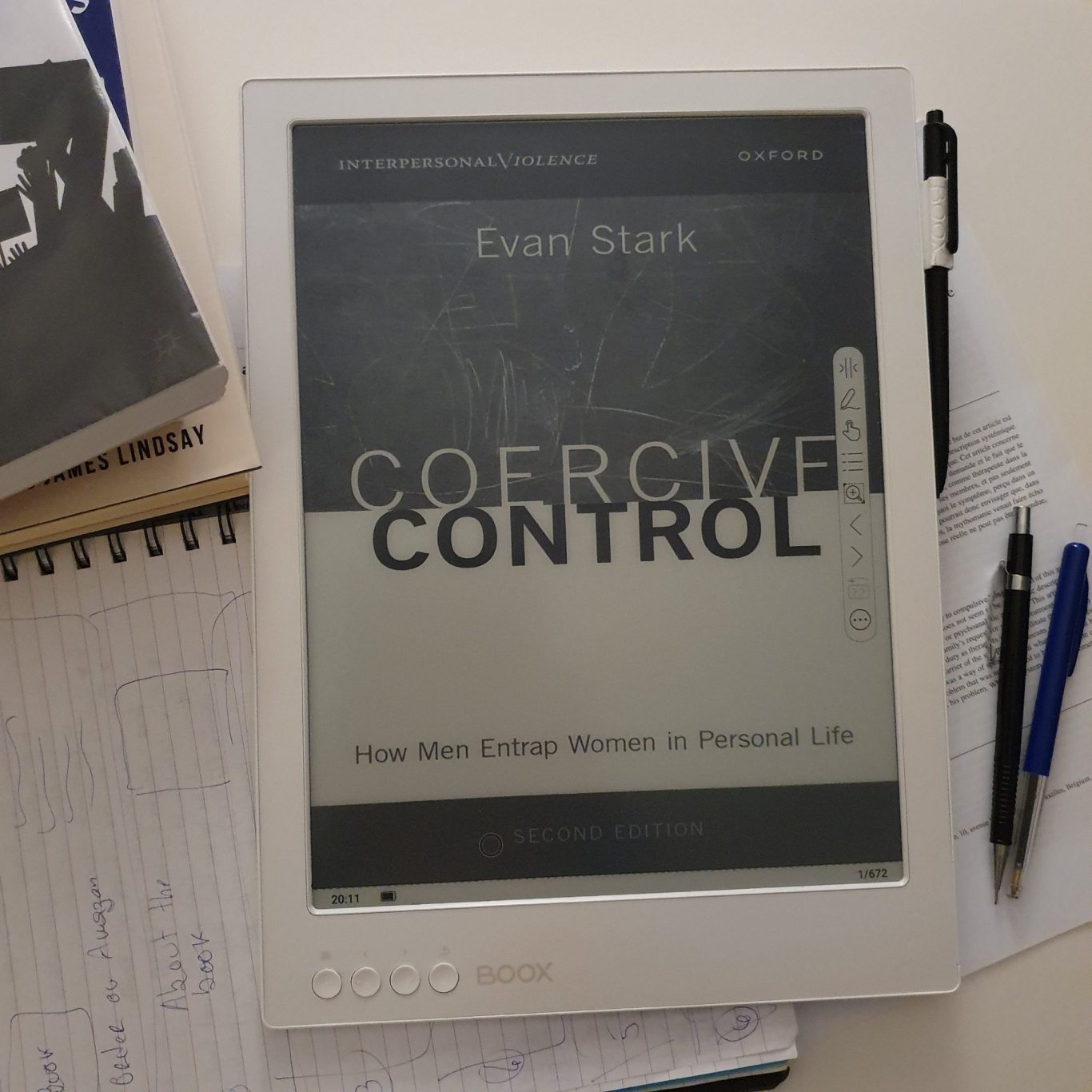
Coercive Control: How Men Entrap Women in Personal Life offers a rethinking of domestic abuse by focusing not only on physical violence but on patterns of domination and control within intimate relationships. Stark argues that many abusive relationships are best understood as systems of coercive control, in which one partner—most often a man—uses a range of non-violent tactics to restrict the other’s freedom and autonomy.
The book explains that coercive control may include intimidation, surveillance, isolation from friends and family, financial control, emotional manipulation, and threats. While physical violence may be present, Stark emphasizes that it is often intermittent and less central than the ongoing effort to dominate everyday life. The cumulative effect of these behaviors is the erosion of a woman’s independence, sense of self, and ability to act freely.
Stark criticizes legal and policy frameworks that treat domestic abuse primarily as isolated incidents of assault. He argues that such approaches fail to capture the lived reality of many victims and often leave them inadequately protected. By contrast, understanding abuse as coercive control highlights the importance of patterns, context, and power relations over time.
Drawing on research, survivor accounts, and legal analysis, the book calls for changes in law, social services, and public understanding. Stark advocates for recognizing coercive control as a serious violation of human rights and for developing legal responses that address control and entrapment, not just physical injury.
Thom, R., Tesylar, P., & Friedman, R. (2017). Pseudologia fantastica in the emergency department: A case report and review of literature. Case Reports in Psychiatry, 2017: 8961256.
This article addresses the phenomenon of pseudologia fantastica, a psychiatric condition characterized by chronic, elaborate lying that is not solely motivated by external rewards. The authors present a case of a 28-year-old man who exhibited this behavior in an emergency department setting, weaving a complex narrative involving feigned medical issues and grandiose achievements. Their findings suggest that pseudologia fantastica may coexist with other psychiatric disorders, such as substance use and personality disorders, highlighting the need for careful evaluation and management of such patients.
UK Government (2013). Defamation Act 2013 (c. 26). https://www.legislation.gov.uk/ukpga/2013/26/contents [Accessed on September 19, 2025].
The Defamation Act 2013 is a UK law designed to reform and modernize defamation law, with the aim of better balancing freedom of expression and protection of reputation. A key change introduced by the Act is the requirement that a statement must cause, or be likely to cause, serious harm to a person’s reputation in order to be considered defamatory. This threshold was intended to discourage trivial or abusive claims. The Act also strengthens defenses for defendants. It clarifies the defense of truth, introduces a statutory defense of honest opinion, and provides protection for publications on matters of public interest. Additional provisions offer safeguards for website operators who host user-generated content, provided they follow proper procedures when complaints are made.
van Dijk, T. A. (1995). Discourse semantics and ideology. Discourse & Society, 6(2), 243–289.
This article by Teun A. van Dijk addresses the relationship between discourse semantics and ideology, proposing a multidisciplinary framework for understanding how ideologies manifest in discourse. The author analyzes opinion articles from the New York Times and Washington Post to illustrate how semantic structures—such as topics, focus, and coherence—are influenced by underlying ideologies. They find that ideologies shape discourse meaning and can control the interpretation of social representations, revealing how power dynamics and social inequalities are reproduced through language. This article contributes to our understanding of the cognitive and social dimensions of ideology in discourse, highlighting the need for a more explicit theoretical framework in critical discourse analysis.
Wu, V., Huff, H., & Bhandary, M. (2010). Pattern of physical injury associated with intimate partner violence in women presenting to the emergency department: A systematic review and meta-analysis. Trauma, Violence & Abuse, 11(2), 71–82.
This article addresses the patterns of physical injury associated with intimate partner violence in women presenting to emergency departments. The authors conducted a systematic review and meta-analysis of existing studies, identifying seven relevant articles that provided data on injury locations and types. They found that unwitnessed head, neck, or facial injuries were significant markers for partner violence, while injuries to the thorax, abdomen, and extremities were not specific to partner violence. This study highlights the importance of specific injury patterns in identifying partner violence among women in emergency settings, a nuance that was not well established in previous literature.