Jaffe, A., Pedersen, W. C., Fisher, D. G., Reynolds, G. L., Hershberger, S. L., Reise, S., & Bentler, P. (2009). Drug use, personality and partner violence: A model of separate, additive, contributions in an active drug user sample. The Open Addiction Journal, 2(1), 39–47.
This article addresses the relationship between drug use, personality traits, and intimate partner violence among active drug users. Prior to this research, it was widely accepted that drug use, particularly alcohol, was a significant contributor to violent behavior, but the authors note that existing literature often conflated drug use with aggressive personality traits. The authors conducted a study involving current drug-using men, assessing their drug use, aggression-related personality variables, and experiences of intimate partner violence. They found that only recent amphetamine use and a latent aggression factor were significantly associated with violence, suggesting that aggressive personality traits may be more predictive of intimate partner violence than drug use itself. This research highlights the need to focus on personality assessments in clinical and correctional settings rather than solely on drug use severity when evaluating the risk of violence among drug users.
Jimenez, X. F., Nkanginieme, N. Dhand, N., Karafa, M., & Salerno, K. (2020). Clinical, demographic, psychological, and behavioral features of factitious disorder: A retrospective analysis. General Hospital Psychiatry, 62, 93–95.
This article addresses the complexities of diagnosing factitious disorder, a condition characterized by the intentional falsification of illness symptoms. The authors conducted a retrospective analysis of 49 patients with confirmed or highly suspected factitious disorder, examining a range of clinical, demographic, psychological, and behavioral variables. They found that the majority of patients were under 40, predominantly female, and had significant psychiatric and traumatic histories, as well as identifiable family dynamic issues. Importantly, the study highlights the presence of psychological and social factors that contribute to factitious disorder, which had not been thoroughly explored in previous research.
Johnson, M. P. (2008). A Typology of Domestic Violence. Northeastern University Press.
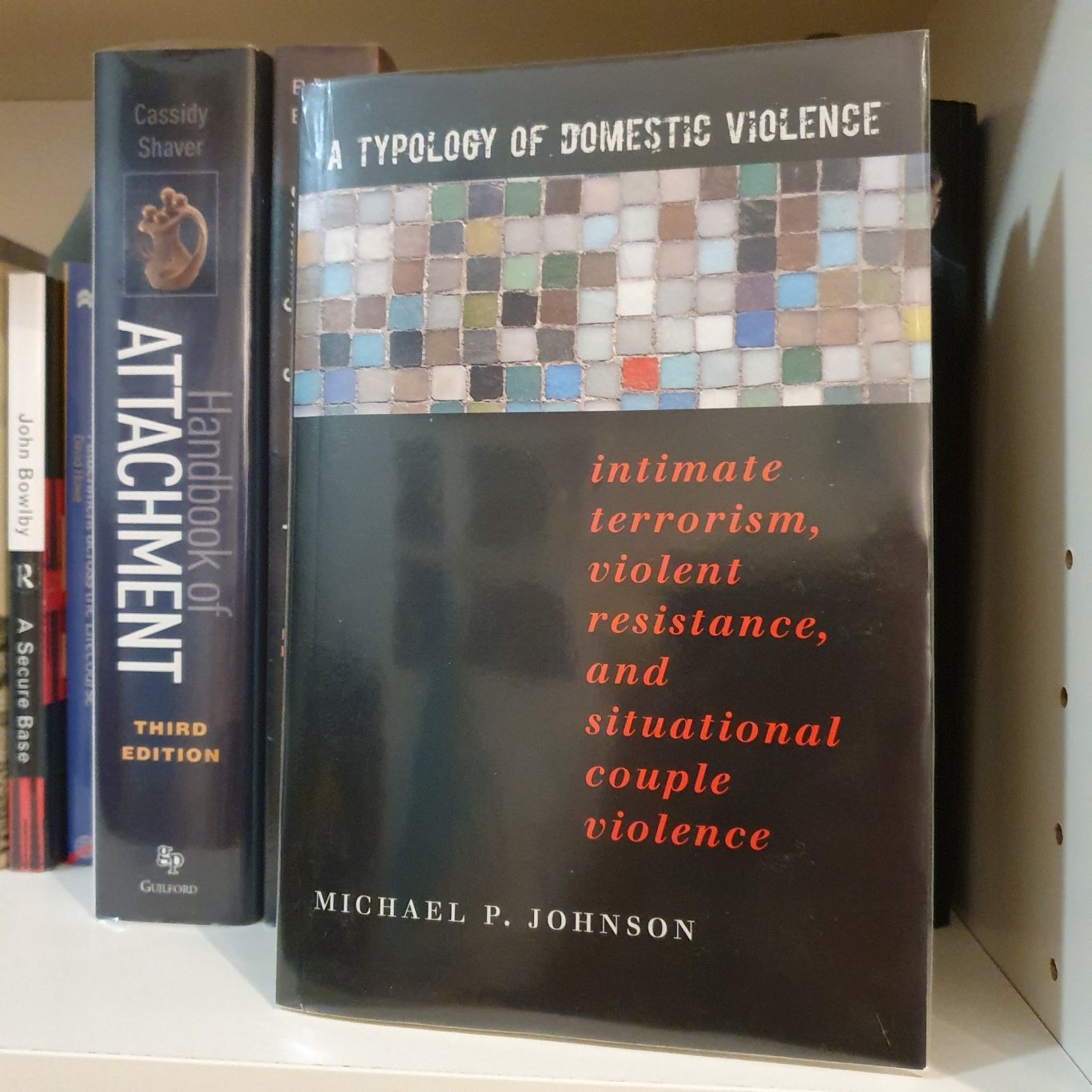
A Typology of Domestic Violence presents a framework for understanding domestic violence that challenges the idea that all forms of intimate partner violence are the same. Johnson argues that differences in motivation, severity, and patterns of control are crucial for accurately understanding violent relationships and for developing effective responses in law, policy, and social services.
The book introduces several distinct types of domestic violence. The most serious form, which Johnson calls intimate terrorism, involves one partner using violence as part of a broader pattern of coercive control, including intimidation, isolation, and domination. This type is most commonly associated with severe and repeated abuse. In contrast, situational couple violence arises from specific conflicts that escalate into physical aggression but does not involve ongoing control or fear. Johnson also describes violent resistance, where one partner uses violence in response to being abused, and mutual violent control, a rare situation in which both partners attempt to dominate each other.
A central contribution of the book is its emphasis on context rather than isolated incidents. Johnson shows that these different types of violence appear in different settings—for example, situational couple violence is more common in general population surveys, while intimate terrorism is more often seen in shelters and the criminal justice system. Understanding these distinctions, he argues, is essential for designing appropriate interventions and avoiding misleading conclusions.
A Typology of Domestic Violence provides a nuanced approach that has had a lasting influence on research, policy, and public understanding of intimate partner violence.
Juarros-Basterretxea, J., Herrero, J., Escoda-Menéndez, P., & Rodríguez-Días, F. J. (2021). Cluster B personality traits and psychological intimate partner violence: Considering the mediation role of alcohol. Journal of Interpersonal Violence, 37(3–4),. NP1566-NP1587.
This article addresses the relationship between Cluster B personality traits (antisocial, borderline, narcissistic, and histrionic) and psychological intimate partner violence, specifically examining the mediating role of alcohol dependence. Prior research indicated a link between certain personality traits and intimate partner violence, but the role of alcohol as a mediator was not thoroughly explored. The authors conducted a study with 196 male inmates. They found that antisocial and borderline personality traits predicted psychological intimate partner violence through alcohol dependence, while histrionic personality traits had a direct effect on this type of violence. Notably, narcissistic traits did not show a significant relationship with partner violence. This study contributes to our understanding by clarifying the specific pathways through which certain personality traits influence psychological partner violence, highlighting the importance of considering alcohol dependence in this context.
Kaufmann, G., Drevland, G. C. B., Wessel, E., Overskeid, G., & Magnussen, S. (2003). The importance of being earnest: Displayed emotions and witness credibility. Applied Cognitive Psychology, 17(1), 21–34.
This article investigates how displayed emotions during testimony affect the perceived credibility of a rape victim, addressing the problem of how emotional expression influences judgments in forensic contexts. The authors conducted an experiment where participants viewed video testimonies of a rape victim portraying different emotional expressions and compared these to reading transcripts of the same testimonies. They found that credibility judgments were significantly influenced by the emotional expressions displayed, with congruent emotions enhancing credibility and neutral or incongruent emotions reducing it, regardless of the content of the testimony. This highlights that perceptions of credibility are more strongly tied to emotional presentation than previously understood, suggesting that social stereotypes about emotional expression play a critical role in legal contexts.
Korenis, P., Gonzalez, L., Kadriu, B., Tyagi, A., & Udolisa, A. (2015). Pseudologia fantastica: Forensic and clinical treatment implications. Comprehensive Psychiatry, 56, 17–20.
This article addresses the phenomenon of pseudologia fantastica, or pathological lying, which involves chronic and excessive lying that is often self-aggrandizing and detrimental to the individual. The authors present three case reports illustrating the clinical and forensic challenges posed by patients exhibiting this behavior, highlighting the complexities in diagnosis and treatment. They found that these cases not only demonstrated the destructive nature of pathological lying but also emphasized the need for clearer definitions and classifications in the DSM (Diagnostic and Statistical Manual of Mental Disorders). This article contributes to our understanding of the implications of pseudologia fantastica in both clinical and legal contexts, revealing the significant challenges it presents for treatment providers and the judicial system.
Leone, J. M., Johnson, M. P., & Cohen, C. L. (2007). Victim help seeking: Differences between intimate terrorism and situational couple violence. Family Relations, 56(5), 427–439.
This article addresses the differences in help-seeking behaviors among women experiencing two types of partner violence: intimate terrorism and situational couple violence. Prior research indicated that these forms of violence have distinct characteristics, but the implications for victims' help-seeking patterns were not well understood. The authors conducted a study with 389 women to examine how the type of violence influences the likelihood of seeking formal (e.g., police, medical) versus informal (e.g., family, friends) help. They found that intimate terrorism victims were more likely to seek formal help, while situational couple violence victims tended to rely more on informal sources. This study highlights that the type of violence experienced significantly affects the resources victims pursue, a nuance that was not fully recognized in previous literature.
Levine, T. R. (2014). Truth-Default Theory (TDT): A theory of human deception and deception detection. Journal of Language and Social Psychology, 33(4), 378–392.
This article introduces Truth-Default Theory, a novel framework for understanding human deception and deception detection. The author proposes that humans generally operate under a "truth-default" presumption, which is adaptive for efficient communication, although it can lead to vulnerability to deception. The author and his research group conducted a series of studies supporting the theory's key propositions, finding that deception is infrequent and that reliance on contextual communication content significantly enhances detection accuracy. This article reveals that the presumption of honesty is not merely a cognitive flaw but a functional aspect of human interaction, shifting the focus from demeanor to the content and context of communication in understanding deception.
Matto, M., McNiel, D. E., & Binder, R. L. (2019). A systematic approach to the detection of false PTSD. Journal of the American Academy of Psychiatry and Law, 47(3), 325–334.
This article addresses the challenge of accurately diagnosing posttraumatic stress disorder (PTSD) while distinguishing genuine cases from false ones, which can arise from malingering, factitious disorders, or misattribution. Prior to this work, the subjective nature of PTSD symptoms and the increasing prevalence of PTSD diagnoses raised concerns about misdiagnosis and its implications for treatment and resource allocation. The authors propose a systematic approach that includes reviewing collateral information, conducting thorough evaluations, and utilizing psychological testing to differentiate between true and false PTSD. They found that a structured methodology can enhance diagnostic accuracy, thereby improving treatment outcomes and ensuring that resources are appropriately directed.
Meislová, M. B. (2024). Othering through blame: The EU as the blame target in the UK government’s post-Brexit rhetoric. Discourse, Context & Media, 58, 100773, 1–8.
This article addresses the problem of how the UK government, particularly under Boris Johnson, utilized blame to construct the European Union (EU) as the "other" in its post-Brexit rhetoric. The authors conducted a detailed analysis of official UK government communications regarding the EU from January 2021 to September 2022, identifying key discourse topics and strategies employed to assign blame to the EU. They found that the government framed the EU as a troublemaker, solution-withholder, under-doer, and over-doer, using various discursive strategies to reinforce this portrayal. This research reveals the intricate dynamics between blame and othering, highlighting how political discourse can shape public perceptions and political narratives in the context of Brexit.
Meredith, V. M. (2009). Victim identity and respect for human dignity: a terminological analysis. International Review of the Red Cross, 91(874), 259–277.
This article addresses the implications of using the term "victim" within the context of humanitarian work, particularly by the International Committee of the Red Cross. The authors conducted a terminological analysis of how "victim" is employed in various communications and practices by the International Committee, revealing a shift towards more nuanced language that respects individual identities and human dignity. They found that recognizing the multifaceted identities of individuals affected by conflict is crucial for promoting their dignity and agency. The article highlights the importance of language in humanitarian discourse and the need for sensitivity in how we label and perceive those affected by violence.
Miller, S. (2005). Victims as Offenders: The Paradox of Women’s Violence in Relationships. Rutgers.
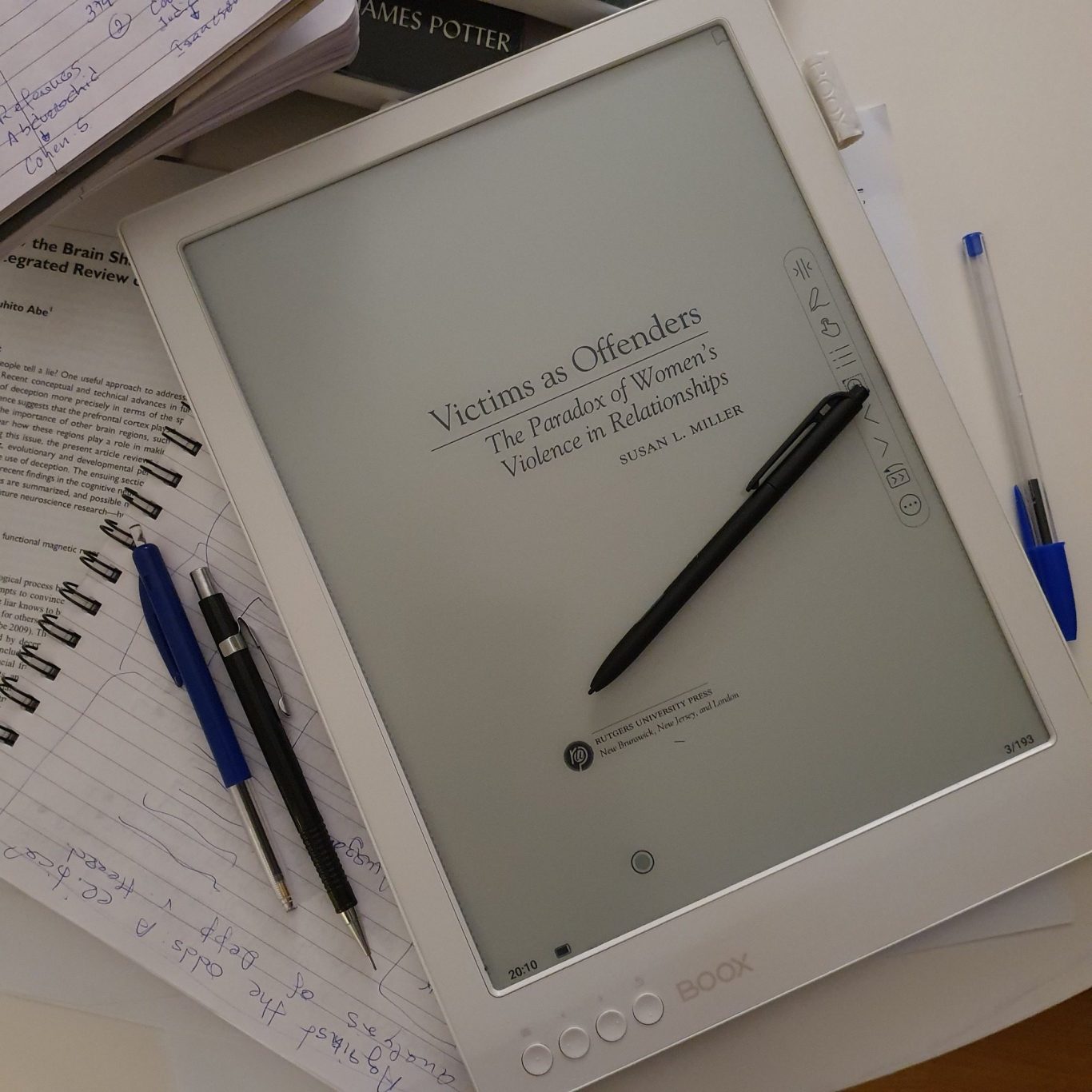
Victims as Offenders: The Paradox of Women’s Violence in Relationships examines the complex and often misunderstood issue of women’s use of violence in intimate relationships. Challenging simplified views that portray domestic violence solely in terms of male perpetrators and female victims, Miller explores how women’s violence can occur within contexts of victimization, coercion, and survival.
Drawing on qualitative research and case studies, the book argues that women who engage in violence are frequently responding to ongoing abuse, threats, or power imbalances. In many of the cases the author reviewed, the women's actions were defensive or reactive rather than attempts to dominate or control a partner. Miller defended that treating all acts of violence as morally or legally equivalent ignores the broader social and relational context in which they occur.
The book also examines how the criminal justice system often struggles to account for these complexities. Women who use violence may be labeled as offenders despite having long histories of victimization, leading to outcomes that fail to recognize their lived experiences. Miller highlights how legal frameworks and social policies can unintentionally punish women for behaviors that emerge from attempts to protect themselves or assert autonomy.
A key theme of the book is the tension between victimhood and agency. Miller emphasizes the importance of understanding women as both harmed and capable of action, without reducing their experiences to stereotypes.
Mohit, B., Dosanjh, S., Tornetta, P., Matthews, D. on behalf of the Violence Against the Women Health Research Collaborative. (2006). Musculoskeletal manifestations of physical abuse after intimate partner violence. The Journal of Trauma, Injury, Infection, and Critical Care, 61(6), 1473–1479.
This article addresses the prevalence and characteristics of musculoskeletal injuries among women who have experienced intimate partner violence. The authors conducted a detailed analysis of 263 women referred to a domestic abuse program, documenting their injury types and abuse history through in-depth interviews. They found that musculoskeletal injuries were the second most common type of injury reported, following head and neck injuries, and identified several factors associated with increased frequency of physical abuse, including younger age and emotional, psychological, and sexual abuse.
Muzinic, L., Kozaric-Kovacic, D., & Marinic, I. (2016). Psychiatric aspects of normal and pathological lying. International Journal of Law and Psychiatry, 46, 88–93.
This article addresses the distinction between normal and pathological lying, a topic that remains poorly understood in psychiatric literature. The authors conducted a review of existing literature, exploring psychological and biological factors associated with pathological lying, and discussed its forensic implications. They found that pathological lying may be characterized by a lack of control and absence of clear external motivation, suggesting it could be viewed as a distinct disorder, potentially linked to personality disorders. The article emphasizes the need for a nuanced assessment of lying behaviors and their impact on functioning, highlighting the complexity of pathological lying as a behavioral pattern.
Pennington, N., & Hastie, R. (1992). Explaining the evidence: Tests of the Story Model for juror decision making. Journal of Personality and Social Psychology, 62(2), 189–206.
This article investigates the Story Model, a framework for understanding juror decision-making in criminal trials. Prior to this research, it was known that jurors often rely on causal reasoning and memory structures when evaluating evidence, but the specific mechanisms of how these processes influence verdicts were not well understood. The authors conducted three experiments to explore how the ease of story construction affects juror decisions, the impact of story completeness on verdicts, and the differences between global and item-by-item judgment strategies. They found that jurors' decisions were significantly influenced by the narrative structure of the evidence presented, with stronger, more confident verdicts emerging when the evidence was organized in a story format. This work highlights the cognitive processes underlying juror decision-making, particularly referring to the mediating role of story construction in legal contexts.
Piotrkowicz, A., Dimitrova, V. Otterbacher, J., & Markert, K. (2017). Headlines matter: Using headlines to predict the popularity of the news articles on Twitter and Facebook.
Conference Paper. Proceedings of the Eleventh International AAAI Conference on Web and Social Media. Available from https://cdn.aaai.org/ojs/14951/14951-28-18470-1-2-
20201228.pdf [Accessed on September 19, 2025].
In this work, Piotrkowicz and colleagues examine how the wording of news headlines influences the spread of articles on social media. The study analyzes a large dataset of news headlines and their performance on platforms such as Twitter and Facebook to understand which linguistic features are linked to higher levels of sharing and engagement. The authors show that headlines play a crucial role in attracting attention online, often serving as the primary factor in a reader’s decision to click or share an article. Certain characteristics—such as emotional language, clarity, length, and the use of questions or striking phrases—are associated with increased popularity. The paper also explores how these effects vary across platforms, reflecting differences in user behavior and sharing practices. The study highlights the power of headlines in shaping information circulation and suggests that subtle linguistic choices can significantly influence how news travels in digital environments.
Pluckrose, H. & Lindsay, J. (2020). Cynical Theories: How activist scholarship made everything about race, gender, and identity–and why this harms everybody. Pitchstone Publishing.
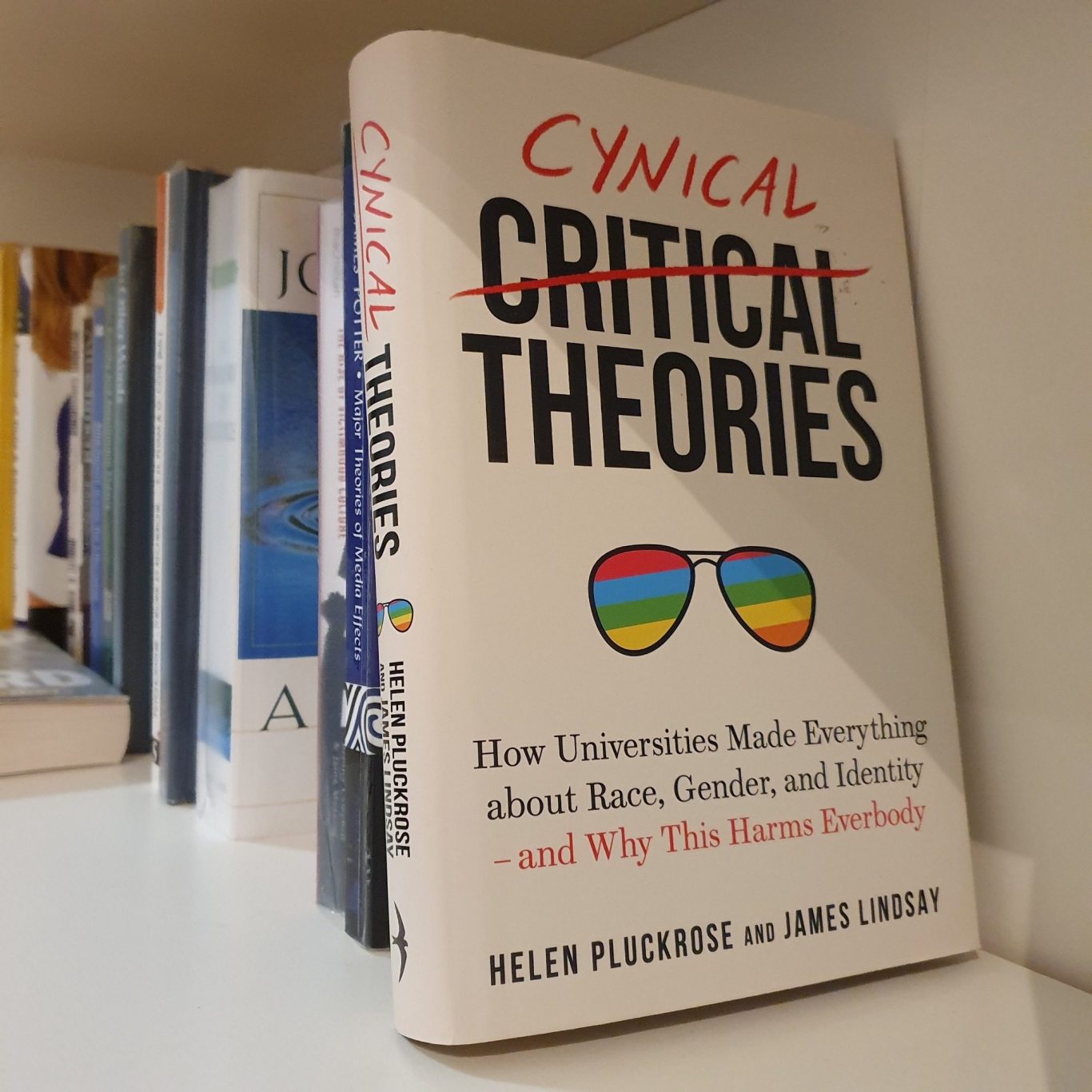
Cynical Theories examines the rise of a group of academic ideas that, according to the authors, have moved from universities into public life and reshaped debates about race, gender, identity, and power. The book traces these ideas to postmodern and post-structuralist theories, which question objective truth and emphasize the role of language, discourse, and power in shaping knowledge.
Pluckrose and Lindsay argue that these theoretical approaches have evolved into what they call “applied postmodernism,” a form of activist scholarship that treats social categories such as race, gender, and sexuality as the primary lenses through which society should be understood. In this framework, personal identity and lived experience are often prioritized over open debate, empirical evidence, or universal principles. The authors contend that disagreement with these ideas is sometimes framed as moral failure or oppression, limiting constructive dialogue.
The book explores how these perspectives influence areas such as education, journalism, corporate training, and activism. The authors express concern that an excessive focus on group identity can increase social division, encourage polarization, and undermine shared standards of reasoning. They argue that well-intentioned efforts to address inequality may become counterproductive when they discourage dissent or reduce individuals to their group identities.
While acknowledging the reality of discrimination and injustice, Cynical Theories defends liberal values such as free inquiry, individual rights, and open discussion. The book invites readers to critically examine contemporary social debates and to consider how academic theories shape public discourse, policy, and everyday interactions in increasingly diverse societies.