Commission of Judicial Performance (2001). Inquiry concerning judge Patrick Couwenberg, CJP Supp. 205.
In Inquiry Concerning Judge Patrick Couwenberg (2001), the California Commission on Judicial Performance considered formal charges against a Superior Court judge for repeated ethical violations. The commission found that Judge Couwenberg had knowingly provided numerous false statements about his background, including misrepresentations about his education, military service, and professional experience. He claimed degrees he did not earn and falsely suggested involvement in covert government operations, none of which were true. These inaccuracies appeared not only on official judicial questionnaires but also in letters to the commission and public statements. Such conduct was deemed to violate multiple canons of the Code of Judicial Ethics, which require honesty, integrity, and candor from judicial officers. Because a judge’s credibility and integrity are fundamental to public confidence in the judiciary, the commission concluded that these misrepresentations were prejudicial to the administration of justice. As a result, the commission ordered Couwenberg’s removal from judicial office, underscoring the seriousness of ethical breaches by members of the judiciary.
Connolly, W. E. (1991). Identity/Difference: Democratic Negotiations of Political Paradox. Cornell University Press.
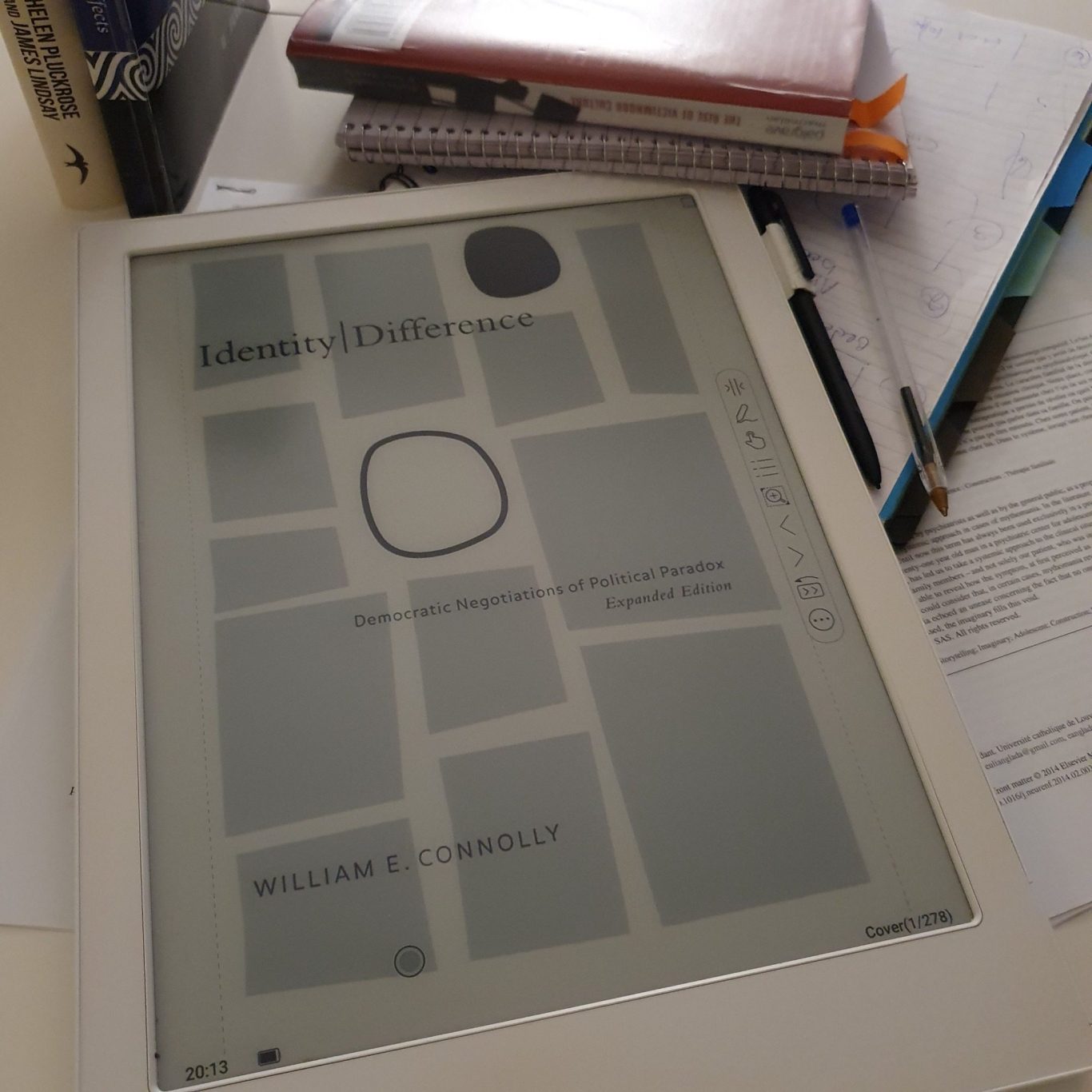
Identity/Difference: Democratic Negotiations of Political Paradox, by political theorist William E. Connolly, explores how modern democracies deal with difference, conflict, and diversity. The book challenges the idea that political communities can or should be built around a single, fixed identity. Instead, Connolly argues that identity is always shaped in relation to what it excludes or defines as “different,” making tension and disagreement unavoidable in political life.
Connolly examines how categories such as nationality, religion, morality, gender, and culture are often treated as stable and natural, even though they are historically and socially constructed. When these identities are presented as universal or unquestionable, they can marginalize or silence those who do not fit dominant norms. The book highlights how claims to moral certainty or political purity can undermine democratic values by turning difference into a threat rather than a condition of pluralism.
A central theme of the book is the idea of agonistic democracy—a form of democracy that does not seek to eliminate conflict but instead manages it through ongoing negotiation, respect, and ethical self-reflection. Connolly encourages citizens to recognize the limits of their own beliefs and to approach political disagreement with humility and openness.
Rather than offering simple solutions, Identity/Difference invites readers to rethink democracy as a dynamic and imperfect process. The book remains influential for its insights into identity politics, tolerance, and democratic coexistence in increasingly diverse societies.
Curtis, D. A. & Hart, C. L. (2020). Pathological lying: Theoretical and empirical support for a diagnostic entity. Psychological Research and Clinical Practice, 2(2), 62–69.
This article addresses the phenomenon of pathological lying, which has historically been recognized in clinical practice but lacks formal classification as a psychological disorder in major diagnostic systems. The authors conducted a study with 623 participants to investigate the characteristics of pathological lying, finding that 8-13% self-identified or were identified by others as pathological liars, who reported significant distress, impaired functioning, and compulsive lying behavior. The findings suggest that pathological lying meets the criteria for a distinct diagnostic entity, providing a clearer definition and implications for future research and clinical practice that were previously lacking.
Damasio, A. (2005). Descartes’ Error. Penguin Books.

Descartes’ Error by neuroscientist Antonio Damasio explores the close relationship between emotion, reason, and decision-making. Challenging a long-standing philosophical tradition that separates mind and body, Damasio argues that rational thinking cannot function properly without emotion. The book’s title refers to what Damasio sees as René Descartes’ mistake: the belief that reason is independent from bodily feelings.
Drawing on neuroscience, psychology, and clinical case studies, Damasio shows how emotions play a crucial role in guiding human behavior. He introduces the concept of somatic markers—bodily signals linked to past experiences that help individuals evaluate options and make decisions efficiently. These emotional signals often operate below conscious awareness but are essential for judgment, social behavior, and moral reasoning.
One of the book’s most compelling examples involves patients with brain damage who retain normal intelligence but lose the ability to feel emotion. Despite their intact reasoning skills, these individuals struggle to make everyday decisions, illustrating how emotion supports rather than undermines rational thought. Damasio uses such cases to demonstrate that emotions are not obstacles to reason but integral components of it.
Beyond individual decision-making, Descartes’ Error has implications for understanding human behavior, ethics, and social interaction. The book suggests that emotional processes are deeply rooted in the body and shaped by evolution, thereby linking biology, culture, and consciousness.
Dervin, F. (2015). Discourses of othering. In K. K. Tracy, T. Sandel, & C. Ilie (Eds.) The International Encyclopedia of Language and Social Interaction. John Wiley & Sons, Inc.
In Discourses of Othering, Dervin explains how language and social interaction shape ideas of “us” versus “them.” The chapter explores othering as a process in which people or groups are represented as different, inferior, or threatening through everyday talk and cultural narratives. Rather than being a natural or fixed category, “the other” is created through social practices and communication that assign meaning to difference. Othering often reflects power relations, reinforcing judgments of superiority and inferiority between groups and even within the same group. Dervin highlights that these processes influence how individuals and communities understand identity, belonging, and exclusion. Because othering can contribute to stereotypes, discrimination, and social barriers, researchers study how it works in conversation, institutions, and media. The chapter also encourages scholars to reflect on their own roles in producing or challenging othering. Overall, Dervin shows that othering is not only about who is labeled as different, but also about how language and interaction shape social realities.
Dike, C. C., Baranoski, M., & Griffith, E. E. (2005). Pathological lying revisited. Journal of American Academy of Psychiatry and Law, 33(3), 342–349.
This article revisits the concept of pathological lying, a phenomenon that has been inadequately understood despite its historical presence in psychiatric literature. The authors conducted a comprehensive review of the historical context, current understanding, and forensic implications of pathological lying, highlighting the need for systematic research to clarify its nature and treatment. They found that while pathological lying may not always be linked to a major psychiatric disorder, it raises significant questions about the liar's awareness and control over their behavior, which has important implications for forensic assessments. This work contributes to our understanding by framing pathological lying as a potentially distinct clinical entity that warrants further investigation.
Dubber, M. D. (2006). The Sense of Justice. New York University Press.
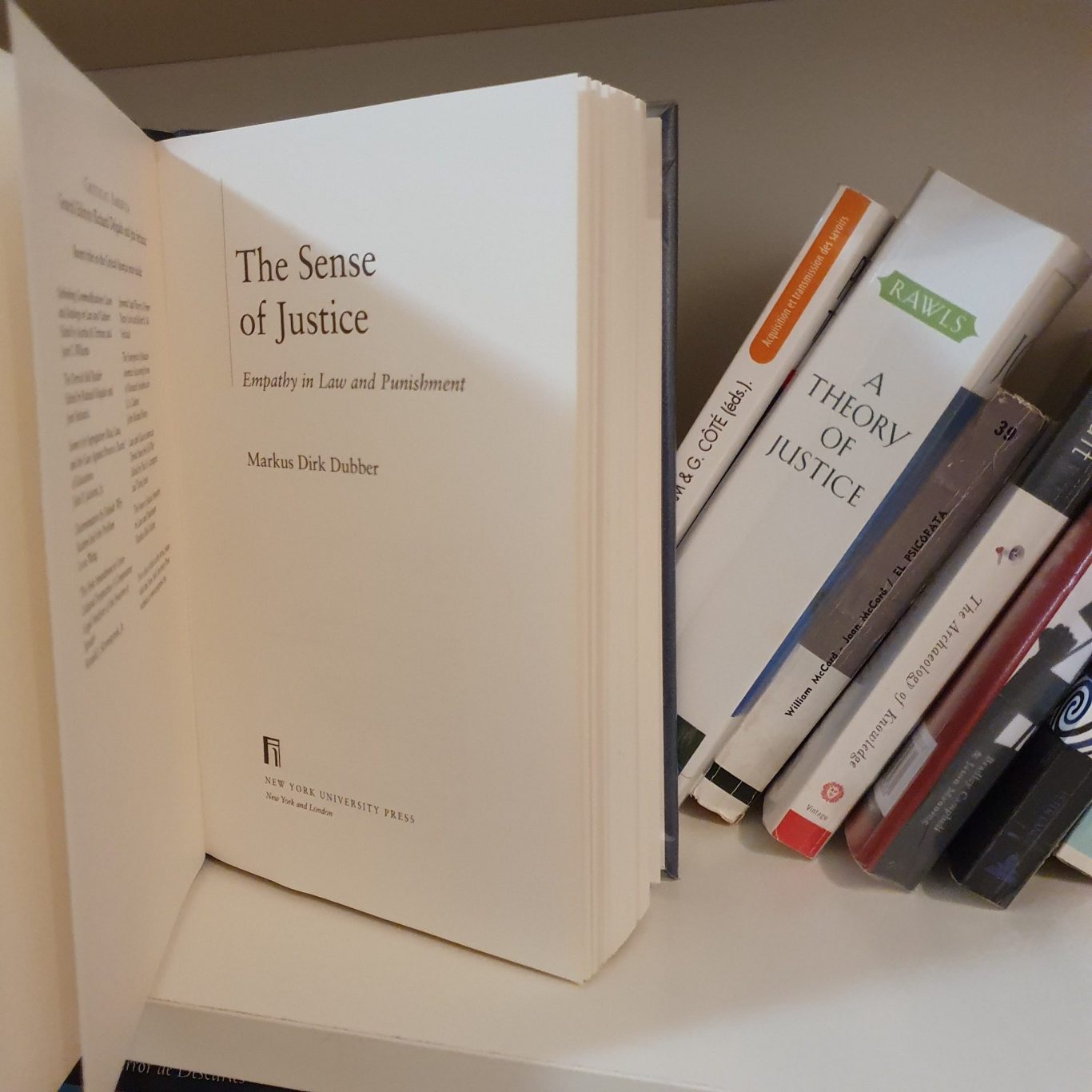
The Sense of Justice by legal scholar Markus Dubber examines how ideas of justice, authority, and punishment shape modern legal systems. Rather than focusing only on laws and institutions, Dubber explores the underlying moral assumptions that influence how societies understand crime, responsibility, and punishment. The book asks what it means to have a “sense of justice” and how this sense is expressed through legal practices.
Dubber traces the historical development of justice from early forms of social authority, such as paternal power and state sovereignty, to contemporary criminal law. He argues that modern legal systems often combine different and sometimes conflicting logics of control, including punishment based on moral blame and regulation aimed at managing risk. This mixture, he suggests, can lead to inconsistencies and tensions in how justice is applied.
A central theme of the book is the relationship between power and personhood. Dubber emphasizes that justice depends on recognizing individuals as persons with rights and dignity, rather than treating them merely as objects of control. When legal systems prioritize authority or security over personhood, the sense of justice can be weakened.
The Sense of Justice encourages readers to reflect critically on how punishment is justified and enforced. By linking legal theory, history, and moral philosophy, the book offers an analysis of justice as both a legal and ethical concept, with relevance for debates about punishment, rights, and the role of the state.
Entman, R. M. (1993). Framing: Toward clarification of a fractured paradigm. Journal of Communication, 43(4), 51–58.
This article addresses the fragmented understanding of the concept of "framing" within communication studies, highlighting the lack of a cohesive theoretical framework that integrates insights from various disciplines. Prior to this work, framing was often defined loosely and inconsistently across fields, leading to confusion and misapplication. The author proposes a comprehensive synthesis of framing theory, detailing how frames operate by selecting and emphasizing certain aspects of reality while omitting others, thereby influencing audience perception and interpretation. He finds that a clearer understanding of framing can enhance the rigor of communication scholarship and provide valuable insights into political communication and public opinion.
Espinosa-Aguilar, A. (2005). Radical rhetoric: Anger, activism, and change. In Keating, A. (ed.) EntreMundos/AmongWorlds. Palgrave Macmillan. pp. 227–232.
In Radical Rhetoric: Anger, Activism, and Change, Espinosa-Aguilar explores the political and social role of anger in movements for change. Rather than viewing anger as purely destructive or irrational, the author defends that it can be a powerful and productive force when expressed through activism and collective struggle. In this context, anger is presented as a response to injustice and marginalization, and as a source of motivation for challenging oppressive structures. Espinosa-Aguilar examines how radical rhetoric uses emotional expression to make inequality visible and to disrupt dominant narratives that normalize exclusion or silence dissenting voices. The chapter argues that emotional intensity can foster solidarity, raise political awareness, and push social issues into public debate. At the same time, it acknowledges the risks of anger being dismissed or misunderstood within mainstream discourse. This work defends the importance of recognizing emotion as a legitimate and meaningful component of political communication and social transformation.
Fairclough, N. (2015). Language and power (3rd ed.). Routledge.

Language and Power by Norman Fairclough is a foundational work in critical discourse studies that examines how language both reflects and shapes power relations in society. Fairclough argues that language is not neutral: the ways people speak, write, and communicate are closely connected to social structures, institutions, and inequalities.
The book introduces the idea that everyday texts—such as political speeches, media reports, advertisements, and workplace communication—play an important role in maintaining or challenging power. Fairclough shows how language can reinforce dominance by presenting certain viewpoints as natural, common sense, or unquestionable. At the same time, language can also be a tool for resistance and social change when it exposes hidden assumptions or gives voice to marginalized perspectives.
A key contribution of the book is its framework for critical discourse analysis, which encourages readers to examine language at three interconnected levels: the text itself, the processes of producing and interpreting it, and the broader social context in which it operates. This approach helps reveal how linguistic choices are shaped by ideology and how they influence people’s beliefs and actions.
Across its updated editions, Language and Power addresses changes in media, politics, and globalization, highlighting how new forms of communication continue to shape social relations. The book provides readers with tools to better understand the political and social effects of language and to engage more critically with the texts that surround them in everyday life.
Fals-Stewart, W., Leonard, K. E., & Birchler, G. R. (2005). The occurrence of male-to-female intimate partner violence on days of men’s drinking: The moderating effects of antisocial personality disorder. Journal of Consulting and Clinical Psychology, 73(2), 239–248.
This article by Fals-Stewart, Leonard, and Birchler investigates the relationship between male partner alcohol consumption and male-to-female intimate partner violence, specifically examining how antisocial personality disorder moderates this relationship. The authors conducted a longitudinal diary study with men in treatment for either domestic violence or alcoholism, finding that alcohol consumption increased the likelihood of non-severe intimate partner violence among men without antisocial personality disorder, while men with this disorder exhibited non-severe intimate partner violence regardless of drinking status. Furthermore, heavy drinking was associated with a higher likelihood of severe intimate partner violence among men with antisocial personality disorder compared to those without.
Genn, H. (2016). Assessing credibility. Principles in Practice. https://www.judiciary.uk/wp-content/uploads/2016/01/genn_assessing-redibility.pdf [Accessed on September 19, 2025].
In Assessing Credibility, Genn discusses the challenges judges and tribunals face when deciding whether a witness is telling the truth. Credibility assessment is a core part of fact-finding in courts, yet research shows that individuals, including judges, are only about as accurate as chance at distinguishing truth from lies. Genn points out that common cues—such as a witness’s appearance, eye contact, or nervous behavior—can be misleading and are not reliable indicators of honesty. She emphasizes that credibility judgments should not rely heavily on instinct or demeanour alone, but instead be based on careful evaluation of the evidence, consistency of testimony, and supporting facts. Because credibility decisions are central to fair outcomes, Genn calls for greater awareness of the limitations of human judgment and for clearer guidance on what factors genuinely assist in determining truthfulness. Her work highlights the importance of training and reflective practice to improve judicial assessments of witness credibility.
Greve, K. W., Ord, J. S., Bianchini, K. J., & Curtis, K. I. (2009). Prevalence of malingering in patients with chronic pain referred for psychological evaluation in a medico-legal context. Archives of Physical Medicine and Rehabilitation, 90(7), 1117–1126.
The study by Greve and colleagues investigated how common malingering is among people with chronic pain who are evaluated in a medico-legal context, such as cases involving compensation claims or legal disputes. Researchers reviewed records from 508 patients referred for psychological evaluation over a ten-year period to estimate how many were likely exaggerating or feigning symptoms for financial or legal benefit. They applied established clinical diagnostic systems and statistical indicators of malingering to assess each case. The results showed that between about 20% and 50% of patients showed evidence of malingering, depending on the diagnostic criteria used. Some contextual factors, like the type of legal claim or lawyer involvement, were associated with slightly higher rates. The authors emphasized that while malingering occurs in a noticeable minority of these cases, not all exaggerated pain complaints should be assumed to be malingering, and formal diagnostic systems should be used to avoid incorrect judgments.
Halldorsdottir, S. (2023). In the jaws of death: Surviving women’s experience of male intimate terrorism. The Journal of Advanced Nursing, 79(4), 1426–1436.
This article addresses the problem of male intimate terrorism and its profound impact on women, particularly focusing on the lived experiences of female survivors. The authors conducted in-depth interviews with nine women who had experienced such violence, revealing a trajectory of abuse that included phases of entrapment, silencing, death, awakening, and recovery. They found that the women's experiences were characterized by escalating violence and psychological aggression, leading to feelings of being "more than dead." This study enhances our understanding of the complexities of intimate terrorism and underscores the need for healthcare professionals to be equipped to recognize and address these issues in their practice.
Healy, W. & Healy, M. (1915). Pathological Lying, Accusation and Swindling. Little Brown.
This article by William Healy and Mary Tenney Healy addresses the phenomenon of pathological lying, false accusations, and swindling, aiming to provide a clearer definition and understanding of these behaviors. The authors conducted extensive case studies, revealing that pathological lying often stems from a combination of genetic predispositions, environmental influences, and early life experiences. They found that many individuals displayed a remarkable aptitude for language, which correlated with their tendency to fabricate stories. Importantly, the authors highlight that while some individuals may show improvement over time, the prognosis for pathological liars varies significantly based on individual circumstances and the presence of supportive environments.
Herman, E. S. & Chomsky, N. (1995). Manufacturing Consent: The Political Economy of the Mass Media. Vintage Books.

Manufacturing Consent: The Political Economy of the Mass Media is a critical analysis of how mass media operate in modern democratic societies. The book argues that news media do not simply inform the public in a neutral way, but are shaped by economic and political forces that influence what is reported and how it is presented.
At the center of the book is the propaganda model, which explains how media content is filtered through a set of structural factors. These include corporate ownership of media organizations, dependence on advertising revenue, reliance on official sources such as governments and corporations, pressure from critics and interest groups, and dominant political ideologies. Together, these factors tend to favor powerful interests and limit the range of viewpoints that reach the public.
Herman and Chomsky show how this process works through detailed examples from news coverage of foreign policy, war, and human rights. They argue that similar events may be framed very differently depending on whether they align with the interests of powerful states or institutions. As a result, some forms of violence or injustice receive intense attention, while others are minimized or ignored.
The book does not claim that journalists consciously deceive the public. Instead, it suggests that institutional pressures shape news production in systematic ways, often without explicit coordination. Manufacturing Consent encourages readers to approach media critically, question dominant narratives, and recognize the role of power in shaping public information. It remains influential for understanding media, democracy, and political communication.
Isaacson, W. (2023). Elon Musk. Simon & Schuster.

Elon Musk (2023) by Walter Isaacson is a detailed biography of the entrepreneur. Based on extensive access to Musk, his family, friends, and colleagues, Isaacson traces Musk’s life from his childhood in South Africa to his leadership roles at companies such as Tesla, SpaceX, Neuralink, and X (formerly Twitter).
The book explores how Musk’s personality—marked by extreme ambition, risk-taking, and emotional intensity—has shaped both his achievements and conflicts. Isaacson describes Musk as a visionary driven by a desire to solve large-scale problems, including climate change, space exploration, and artificial intelligence. At the same time, the biography does not avoid Musk’s darker traits, such as impulsiveness, harsh management style, and turbulent personal relationships.
In the biography, Isaacson also addresses Elon Musk’s personal relationship with Amber Heard, presenting it as intense, emotionally charged, and deeply influential on Musk’s state of mind during that period. According to the author, the relationship was marked by strong mutual attraction but also by volatility, jealousy, and recurring conflict. Isaacson describes how Musk became deeply emotionally invested and struggled with the instability of the relationship, which at times affected his mood, focus, and interactions with others. The book suggests that Musk’s tendency toward emotional extremes—both devotion and distress—was particularly evident in this relationship.