Abdurrachid, N. & Gama, M. J. (2022). Munchausen syndrome by proxy (MSBP): A review regarding perpetrators of factitious disorder imposed on another (FDIA). CNS Spectrums, 27(1), 16–26.
This article by Abdurrachid and Gama Marques reviews the characteristics of perpetrators of Munchausen syndrome by proxy, now more accurately referred to as factitious disorder imposed on another. Prior to this study, Munchausen syndrome by proxy was recognized as a rare form of child abuse characterized by caregivers fabricating or inducing illness in their dependents, but detailed profiles of perpetrators were limited. The authors conducted a systematic review of 108 articles, focusing on 81 case reports from the last 15 years, and found that the majority of perpetrators were female, often with psychiatric diagnoses, and that the most common method of falsification was induction of symptoms. They also noted high rates of recurrence and varied outcomes for victims, including separation from the perpetrator and instances of death. This review highlights the need for increased awareness among healthcare professionals regarding the signs of factitious disorder imposed on another, which may lead to better identification and management of such cases.
Adshead, G. & Bluglass, K. (2001). A vicious circle: Transgenerational attachment representations in a case of factitious illness by proxy. Attachment and Human Development, 3(1), 77–95.
This article addresses the problem of transgenerational attachment representations in the context of factitious illness by proxy (also called factitious disorder imposed on another in current literature), a form of child maltreatment where a caregiver fabricates or induces illness in a child. The authors conducted a case study involving three generations of women, utilizing the Adult Attachment Interview to explore their attachment histories. They found evidence of insecure attachment patterns in both the mother and grandmother, suggesting that these patterns may contribute to the development of factitious illness by proxy behavior. This study provides insights into how attachment insecurity can manifest across generations, particularly in the context of abnormal caregiving behaviors, which was not previously well-documented in the literature.
Adshead, G. & Bluglass, K. (2005). Attachment representations in mothers with abnormal illness behaviour by proxy. British Journal of Psychiatry, 187(4), 328–333.
This article addresses the issue of abnormal illness behavior by proxy (also called factitious disorder imposed on another), specifically focusing on mothers who exhibit such behaviors, often leading to child maltreatment. The authors conducted a semi-structured interview assessing attachment representations in 67 mothers identified through legal proceedings for abnormal illness behavior. They found that a significant majority of these mothers exhibited insecure attachment styles, with many showing unresolved trauma or loss. This study indicates that insecure attachment is likely to be a risk factor for this type of child maltreatment, highlighting the need for therapeutic interventions targeting unresolved psychological distress in these mothers.
American Psychiatric Association, APA (2013). Diagnostic and Statistical Manual of Mental Disorders (5th ed.), DSM-5. American Psychiatric Association: Washington DC.
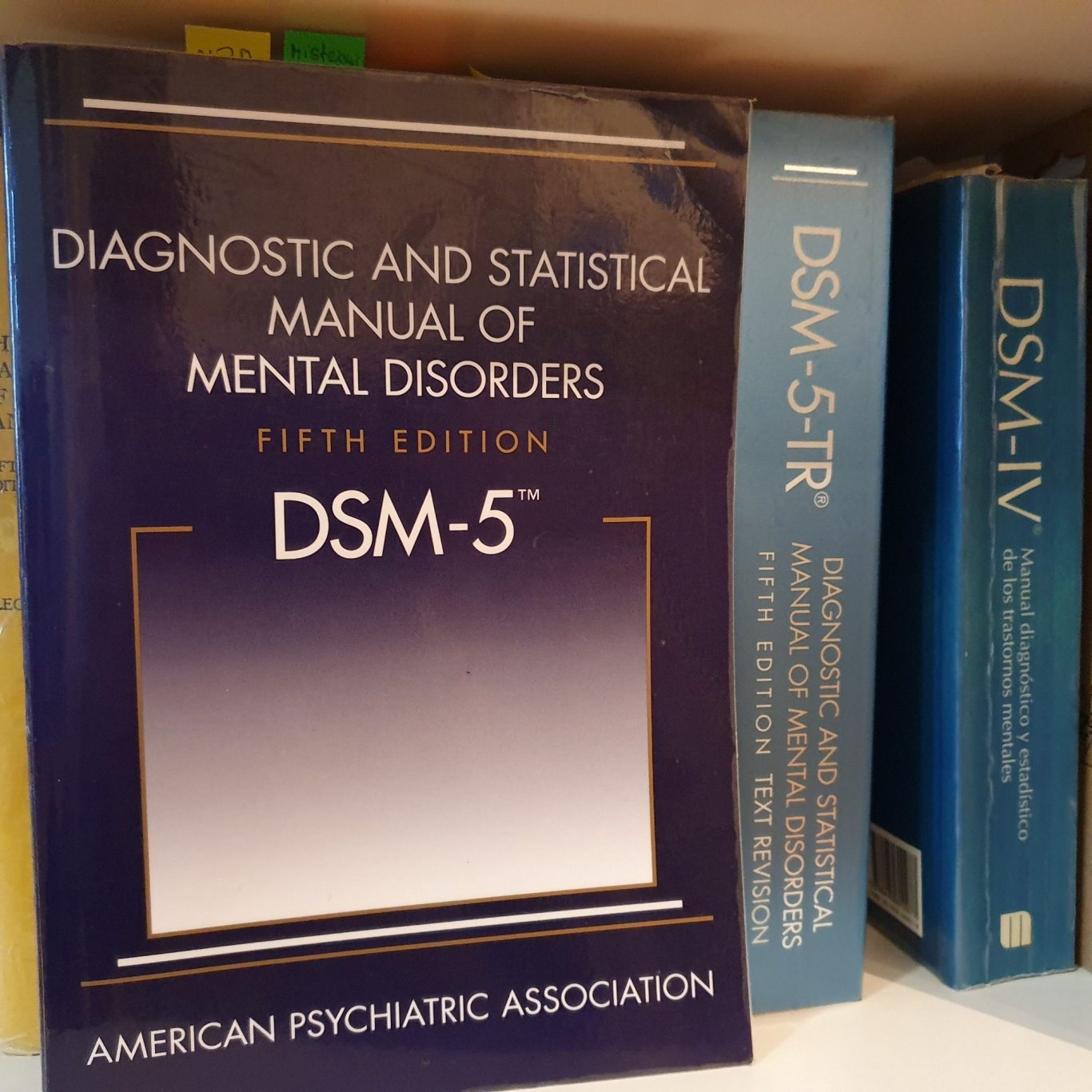
The Diagnostic and Statistical Manual of Mental Disorders, Fifth Edition (DSM-5) is a reference book used by mental health professionals to identify and classify mental health conditions. Published by the American Psychiatric Association in 2013, it provides a shared framework that helps psychologists, psychiatrists, and other clinicians use the same terms and criteria when diagnosing mental health disorders.
The DSM-5 describes a wide range of mental health conditions, including depression, anxiety disorders, schizophrenia, and developmental disorders. For each condition, it outlines common symptoms, typical patterns, and guidelines that help professionals determine whether a diagnosis is appropriate. The goal of the manual is not to explain why mental disorders occur, but to ensure that diagnoses are made consistently and based on clear standards.
One of the main changes introduced in the DSM-5 compared with prior editions of the manual was a shift toward viewing mental health conditions as existing along continua rather than as strictly separate categories. This reflects the understanding that symptoms can vary in intensity and may change over time. The manual also places greater emphasis on cultural and social factors, recognizing that people’s backgrounds and life circumstances can influence how mental health difficulties are experienced and expressed.
Although the DSM-5 is widely used, it has also generated discussion and criticism. Some argue that it may label normal variations in human behavior as medical problems. Despite these concerns, the DSM-5 remains an important tool that supports clear communication, informed treatment decisions, and a common understanding of mental health in clinical and research settings.
Armaly, M. T. & Enders, A. M. (2022). ‘Why me?’ The role of perceived victimhood in American politics. Political Behavior, 44(4), 1583–1609.
This article addresses the concept of perceived victimhood in American politics, a topic that has received limited empirical attention despite its prominence in political discourse. The authors developed a theory distinguishing between two manifestations of victimhood: egocentric victimhood, which centers on personal grievances, and systemic victimhood, which attributes blame to broader societal structures. Using nationally representative survey data, they found that both forms of victimhood are prevalent across various demographic and political groups and are distinct from related psychological constructs. The authors also demonstrated that political messaging can effectively cue feelings of victimhood, influencing political attitudes and behaviors. This research reveals that perceived victimhood is a significant factor in shaping political preferences, a nuance that was not fully understood before.
Bingham, T. (2011). The Rule of Law. Penguin Books.

The Rule of Law (2011) by Tom Bingham explains one of the most important principles of democratic societies: the idea that everyone, including governments, must follow the law. Written by a former senior British judge, the book aims to make this concept understandable to the general public.
Bingham explains that the rule of law means laws should be clear, publicly known, and applied equally to all people. No one should be above the law, and legal decisions should be made through fair and transparent processes. He emphasizes that the law exists to protect individual rights, prevent the abuse of power, and maintain social order. According to Bingham, the rule of law is essential for freedom, justice, and trust in public institutions.
The book is organized around eight key principles that together define what the rule of law requires in practice. These include access to justice, equality before the law, protection of human rights, and limits on the arbitrary use of power by authorities. Bingham illustrates these ideas with real examples from British and international legal cases, helping readers see how the rule of law affects everyday life.
Throughout the book, Bingham also addresses modern challenges to the rule of law, such as terrorism, national security, and the tension between government authority and individual freedoms. He argues that even in difficult circumstances, respecting the rule of law is crucial for maintaining democratic values.
The Rule of Law offers a thoughtful and accessible explanation of why the law matters, how it should function, and why protecting it is essential for a fair and stable society.
Birch, C. D., Kelin, B. R. C., & Aquino, E. P. B. (2006). A review and case report on pseudologia fantastica. Journal of Forensic Psychiatry & Psychology, 17(2), 299–320.
This article addresses the phenomenon of pseudologia fantastica, or pathological lying, which is characterized by excessive, purposeless deception that often leads to significant social and legal consequences. The authors conducted a literature review and presented a case report of a 22-year-old woman who made dramatic false accusations, resulting in severe repercussions for others, including wrongful imprisonment. They found that her lies were primarily driven by internal psychological motives rather than external gains, highlighting the need for better diagnostic criteria and understanding of the condition. This article emphasizes the complexities of pseudologia fantastica and the implications for forensic mental health professionals.
Bowlby, J. (1969). Attachment. Basic Books, Inc.

Attachment (1969) by John Bowlby is a foundational book in psychology that explains the deep emotional bonds formed between children and their caregivers, and why these early relationships are essential for healthy development. Bowlby, a British psychiatrist and ethologist, introduced attachment theory to help explain how early experiences with caregivers shape emotional well-being throughout life.
At the core of Bowlby’s work is the idea that human beings are biologically predisposed to seek closeness to others, especially in times of stress or danger. For infants, forming a strong attachment to a primary caregiver provides a sense of safety and security. This secure base allows children to explore the world, develop confidence, and learn how to manage emotions and relationships.
Bowlby explains that when caregivers are consistently responsive and sensitive to a child’s needs, secure attachment is likely to develop. In contrast, inconsistent, neglectful, or frightening caregiving can lead to insecure attachment patterns, which may affect how individuals relate to others later in life. These early attachment experiences, Bowlby argued, influence expectations about trust, intimacy, and emotional regulation well into adulthood.
The book also emphasizes the long-term impact of separation, loss, or disruption in early relationships. Bowlby drew on research from psychology, biology, and ethology to show that prolonged separation from caregivers can have lasting emotional consequences, particularly when children lack adequate emotional support.
Although written over fifty years ago, Attachment remains highly influential in psychology, education, and mental health practice. It laid the groundwork for later research on attachment styles and continues to shape how professionals understand child development, parenting, and close relationships across the lifespan.
Burton, M. C., Warren, M. B., Lapid, M. I., & Bostwick J. M. (2015). Munchausen syndrome by adult proxy: A review of the literature. Journal of Hospital Medicine, 10(1), 32–35.
This article reviews the limited literature on Munchausen Syndrome by Adult Proxy (also called factitious disorder imposed on another with an adult victim), a form of abuse where caregivers feign or induce illness in adults under their care for psychological gratification. Prior to this study, factitious disorder imposed on another with an adult victim was under-recognized compared to its pediatric counterpart, with few documented cases. The authors conducted a comprehensive literature search, identifying 13 cases of the condition, primarily involving female caregivers and older adult victims. They found that poisoning was the most common method of abuse, and many victims were unaware of their situation, with some even colluding with their abusers. This review highlights the need for clinicians to consider factitious disorder imposed on another in differential diagnoses when faced with complex medical presentations and overly involved caregivers and adult victims, thereby enhancing awareness of this condition in adult populations.
Campbell, B. & Manning, J. (2018). The rise of victimhood culture: Microaggressions, safe spaces, and the new cultural war.
Palgrave Macmillan.
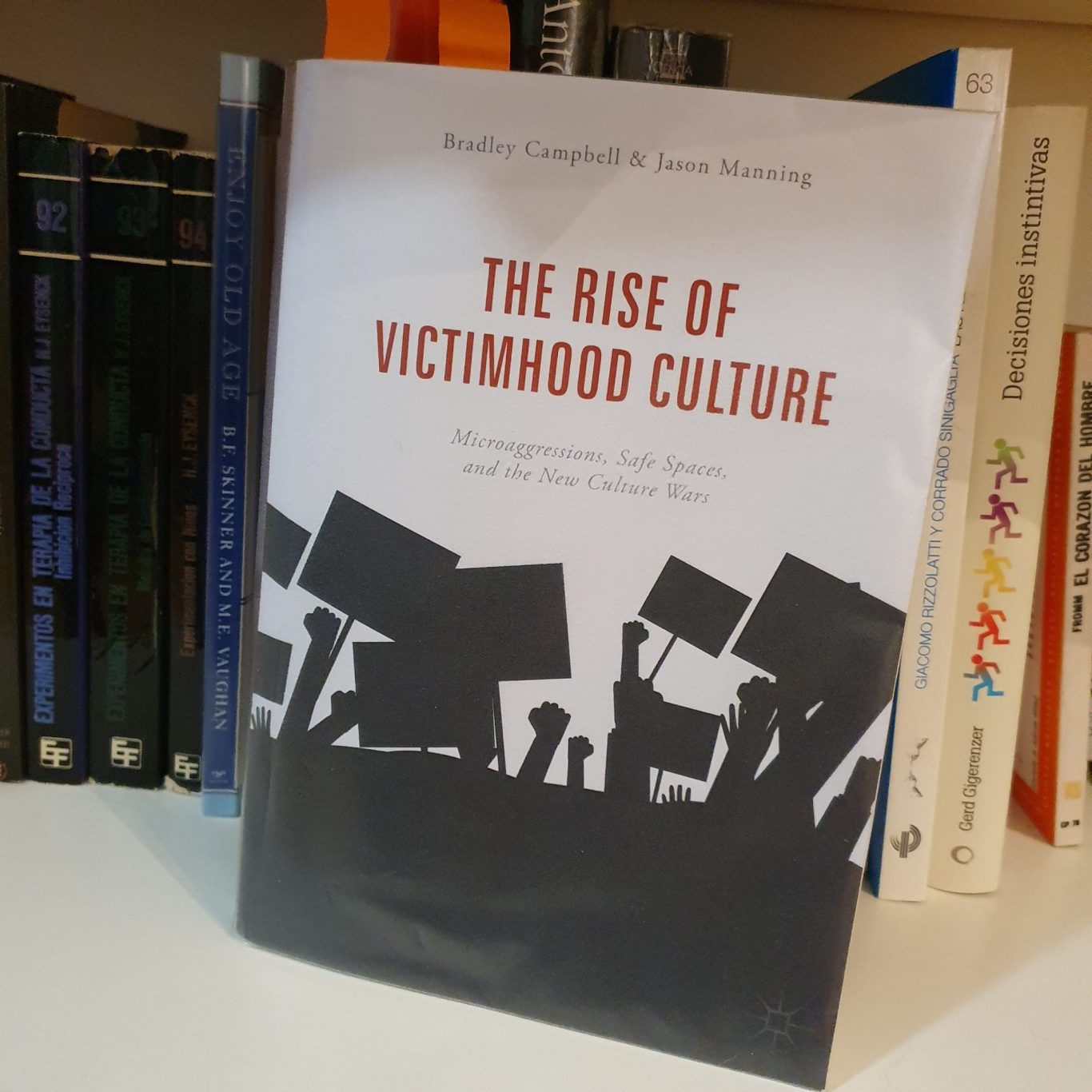
The Rise of Victimhood Culture: Microaggressions, Safe Spaces, and the New Cultural War (2018) by Bradley Campbell and Jason Manning is a sociological analysis of changing moral norms in contemporary Western societies, particularly in universities and public debates. The authors explore how people respond to conflict, offense, and injustice, and how these responses have evolved over time.
Campbell and Manning describe what they call “victimhood culture,” a cultural pattern in which individuals gain moral status by presenting themselves as victims of harm or offense. In this context, even relatively minor slights or perceived insults—often referred to as “microaggressions”—are treated as serious moral issues. Rather than resolving conflicts directly or informally, people are encouraged to seek support from authorities or public audiences to address grievances.
The authors contrast victimhood culture with two earlier moral cultures. In “honor culture,” individuals defended their reputation through strength or retaliation, while in “dignity culture,” people were expected to handle minor offenses privately and rely on legal systems only for serious wrongdoing. According to Campbell and Manning, victimhood culture represents a shift away from these models, emphasizing sensitivity to harm and institutional intervention.
The book also examines the rise of “safe spaces” and increased concern about emotional well-being, particularly in educational settings. While acknowledging the importance of protecting individuals from genuine harm, the authors argue that these trends can discourage resilience, open debate, and tolerance of disagreement.
This book offers a provocative perspective on current cultural conflicts. Whether readers agree or disagree with its conclusions, The Rise of Victimhood Culture provides a useful framework for understanding debates about offense, identity, and social justice in modern public life.
Carnahan, K. T. & Jha, A. (2023). Factitious disorder. In: StatPearls [Internet]. Treasure Island (FL): StatPearls Publishing.
This educational material discusses that factitious disorder is a mental health condition in which a person deliberately creates, exaggerates, or fakes physical or psychological symptoms. Unlike situations where someone pretends to be ill for practical benefits such as money or avoiding responsibilities, individuals with factitious disorder are driven by internal needs, including a desire for attention, care, or emotional support. People with factitious disorder may seek repeated medical treatment and willingly undergo tests or procedures, which can place them at serious risk of harm. Because the behavior involves intentional deception, the condition is often difficult to recognize and may go undiagnosed for long periods. Its causes are not fully understood, but it is commonly associated with early life trauma, difficult childhood experiences, and other mental health conditions. Psychotherapy is the main form of treatment, though progress can be slow. With long-term care and coordinated professional support, some individuals can experience improvement.
Chafetz, M. D. (2011). Reducing the probability of false positives in malingering detection of social security disability claimants. The Clinical Neuropsychologist, 25(7), 1239–1252.
This article addresses the problem of false positives in malingering detection among Social Security Disability claimants, a significant concern given the potential consequences for honest claimants. Prior to this study, it was known that using symptom validity tests could lead to mislabeling individuals as malingerers, but the extent of this issue and the effectiveness of multiple indicators in reducing false positives were not fully understood. The authors conducted a known-groups design study to evaluate the impact of failing multiple components of the Symptom Validity Scale on the probability of malingering. They found that the posterior probability of malingering significantly increased with the number of failed indicators, reaching a point where three failures essentially eliminated false positives. This study provides new insights into the utility of multiple indicators in enhancing diagnostic accuracy for malingering in low-functioning individuals, reinforcing the importance of using a multi-component approach in assessments.
Chomsky, N. (2002). Media Control: The Spectacular Achievements of Propaganda (2nd ed.). Seven Stories Press.

Media Control: The Spectacular Achievements of Propaganda (2002) by Noam Chomsky examines how modern media systems shape public opinion in democratic societies. Chomsky, a linguist and political thinker, argues that propaganda is not limited to authoritarian regimes but plays a powerful role in democracies as well, where control is exercised more subtly through information and messaging rather than force.
The book explores how governments, corporations, and other powerful institutions influence what issues receive attention and how they are framed in the media. According to Chomsky, this process helps guide public discussion in ways that protect elite interests while giving the appearance of free choice and open debate. Rather than relying on censorship, modern propaganda works by selecting certain narratives, excluding others, and repeatedly reinforcing acceptable viewpoints.
Chomsky draws on historical examples, particularly from U.S. foreign policy, to illustrate how media coverage can shape public perceptions of events such as wars, international conflicts, and political interventions. He argues that emotionally charged language, selective reporting, and simplified narratives can discourage critical thinking and limit public understanding of complex issues.
A central theme of the book is the importance of public awareness and critical media consumption. Chomsky encourages readers to question sources of information, examine who benefits from particular narratives, and recognize the structural pressures that influence journalism. He emphasizes that a healthy democracy depends on an informed and critically engaged public.
Media Control offers an introduction to Chomsky’s views on propaganda, media power, and democratic responsibility, inviting readers to reflect on how information is produced and how it shapes political and social life.
Chomsky, N. (2017). The language capacity: Architecture and evolution. Psychonomic Bulletin & Review, 24(1), 200–203.
This article by Noam Chomsky addresses the problem of understanding the unique human language capacity as a biological property that is distinct from other cognitive systems. Chomsky proposes that language capacity is characterized by a generative computational system that produces an infinite array of structured expressions, with externalization being a separate process that does not affect core semantic properties. He found that the core aspects of language capacity have remained stable since the emergence of Homo sapiens, suggesting little evolutionary change in this capacity. This article clarifies the relationship between the internal language system and its externalization, emphasizing that the apparent diversity of languages largely results from externalization processes rather than fundamental changes in the underlying language capacity.
Christie, N. (1986). The ideal victim. In: Fattah, E. A. (ed.) From Crime Policy to Victim Policy. Macmillan. (pp. 17–30).
In The Ideal Victim (1986), criminologist Nils Christie explores how societies decide who is recognized as a “real” or deserving victim of crime. Christie argues that victimhood is not simply about suffering harm, but also about meeting certain social expectations. Some people are more easily accepted as victims than others, depending on factors such as age, gender, behavior, and social status. According to Christie, the “ideal victim” is typically someone perceived as weak, innocent, and blameless, who is harmed by a clearly identifiable and morally bad offender. When victims fit this image, they are more likely to receive sympathy, support, and legal recognition. Those who do not—such as individuals involved in risky activities or those from marginalized groups—may struggle to be acknowledged as victims, even when they have suffered real harm. Christie’s analysis highlights how power, stereotypes, and social narratives shape responses to crime.
Clermont, K. M. & Eisenberg, T. (1992). Trial by jury or judge: Transcending empiricism. Cornell Law Faculty Publications. Paper 246.
In this work, Clermont and Eisenberg examine the long-standing debate over whether legal cases are better decided by juries or by judges. Rather than arguing that one system is universally superior, the authors challenge simple comparisons based solely on statistics or win–loss rates. The authors suggest that differences between jury trials and bench trials often reflect the types of cases that reach each forum, rather than the decision-makers themselves. Certain cases are more likely to be tried before a jury, while others are more commonly heard by judges, which influences outcomes in ways that can be misleading if context is ignored. The authors emphasize that legal processes, case selection, and lawyers' strategic choices all play a significant role in shaping outcomes. The paper encourages a more nuanced understanding of how legal decisions are made. It argues that meaningful evaluation of judges and juries must go beyond simple empirical comparisons and consider the broader institutional and procedural context of the justice system.
Cohen, S. (1972/1987). Folk Devils and Moral Panics: The Creation of the Mods and Rockers. Routledge Classics.

Folk Devils and Moral Panics: The Creation of the Mods and Rockers (originally published in 1972 and later reissued in 1987) by sociologist Stanley Cohen is a classic study of how societies react to perceived threats to social order. The book examines public and media responses to clashes between two British youth subcultures—the Mods and the Rockers—during the 1960s, using these events to develop a broader theory of moral panic.
Cohen introduces the concept of moral panic to describe situations in which a group, event, or behavior is portrayed as a serious danger to societal values and interests. In these moments, the media often exaggerates or distorts events, creating simplified and dramatic narratives that fuel public fear and outrage. The groups targeted in this process are labeled “folk devils”—symbolic enemies blamed for wider social problems.
The book shows how moral panics involve several key actors, including the mass media, politicians, law enforcement, and moral commentators. Together, these actors contribute to escalating concern and calls for control, often leading to harsher policing, new laws, or social exclusion. Cohen argues that such reactions are frequently disproportionate to the actual threat posed.
Beyond its historical case study, the book offers a framework for understanding similar phenomena in later contexts, such as reactions to youth culture, crime, immigration, or new media. Folk Devils and Moral Panics remains influential because it helps explain how fear, power, and social control operate in modern societies, and how public narratives can shape responses to perceived deviance.