“When I stumble upon an issue that doesn’t quite add up, I can’t ignore it; I need to keep asking, reading, and thinking until clarity emerges.”
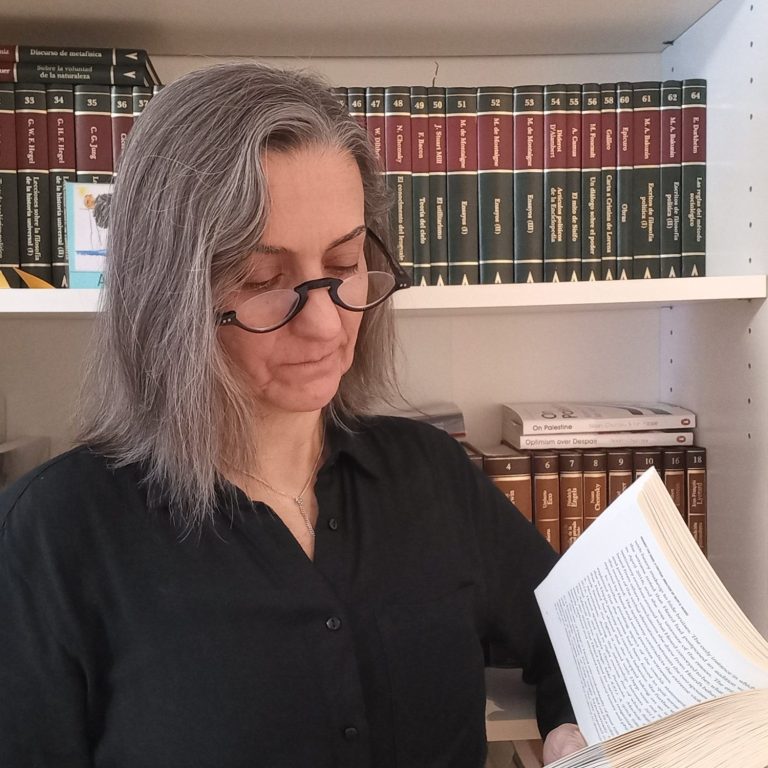
Teresa C. Silva
Teresa C. Silva is an Associate Professor of Criminology at Mid Sweden University, where her work sits at the intersection of health sciences, psychology, and the social sciences. Her professional path has been shaped by a long-standing interest in how individual vulnerability, institutional responses, and social contexts interact in the production of harm, conflict, and criminal behavior.
She began her career in clinical practice, working for several years as a nurse in hospital settings in Portugal and Spain. This early experience grounded her perspective in everyday encounters with suffering, inequality, and systemic constraints, and continues to inform her academic approach. Alongside her clinical work, she pursued formal training in psychology and public health, later completing a Ph.D. in Psychology at the University of Valencia (Spain), with a dissertation focused on the assessment of psychopathy within the Spanish juvenile justice system.
Teresa has also worked as a forensic evaluator, conducting psychological assessments of victims and offenders for court proceedings in Spain. This period of applied forensic work—addressing cases involving substance abuse, domestic violence, sexual offending, and medical malpractice—reinforced her interest in the gap that often exists between legal narratives, clinical realities, and empirical evidence.
Most of her career, however, has unfolded within academia. She has held postdoctoral positions in Canada and Sweden and has taught extensively in health sciences, psychology, and criminology. Since joining Mid Sweden University, she has combined research, teaching, and academic leadership, serving for several years as head of the School of Criminology. Her research has addressed topics such as childhood maltreatment, juvenile delinquency, drug abuse, domestic and interpersonal violence, and crime prevention, often with a strong emphasis on evidence-based policy and practice.
While much of her scholarly work has been directed toward academic audiences, Against the Odds marks her first book written specifically for a broader readership. Writing beyond academia, she reflects, has meant learning to communicate complex and controversial issues with clarity and restraint, without losing analytical depth—a challenge she embraces as both a professional and ethical responsibility.